

Modern drivers are constantly searching for ways to reduce fuel expenses without compromising performance. With fuel prices fluctuating and environmental concerns increasing, the demand for smarter automotive solutions is growing rapidly. One such product gaining attention is OptiFuel, a compact plug-in device designed to enhance fuel efficiency and optimize engine performance.
But how effective is it in real-world use? In this fresh, in-depth article, we’ll break down everything about OptiFuel—its concept, functionality, advantages, limitations, and whether it deserves a place in your car.
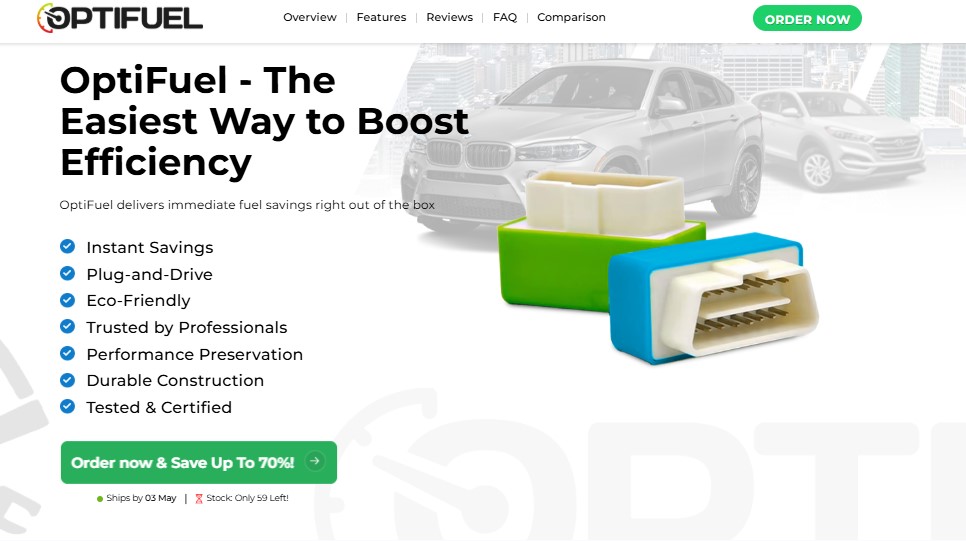
What Exactly is OptiFuel?
OptiFuel is a small electronic module that connects directly to your vehicle’s OBD-II (On-Board Diagnostics) port. This port allows access to your car’s internal data system, enabling the device to monitor and analyze various performance parameters.
Instead of altering your vehicle physically, OptiFuel works digitally. It reads data from the engine and attempts to optimize how fuel is consumed based on real-time conditions and your driving habits.
The idea behind OptiFuel is simple: make your car smarter about how it uses fuel.

The Technology Behind OptiFuel
At the heart of OptiFuel is a data-driven optimization system. While it doesn’t fundamentally change your engine, it interacts with your car’s ECU (Engine Control Unit) to refine how the engine behaves under different conditions.
How it operates:
1. Plug-and-Play Activation
Once inserted into the OBD-II port, the device powers up automatically when the ignition is turned on.
2. Data Monitoring
It tracks various factors such as:
- Engine load
- Fuel-air ratio
- Throttle usage
- Driving speed and acceleration
3. Pattern Recognition
OptiFuel gradually learns your driving behavior—whether you drive aggressively, smoothly, or inconsistently.
4. Adaptive Adjustment
Based on this data, the device helps fine-tune engine performance for improved efficiency.
Over time, the device “adapts” to your driving style, aiming to deliver better fuel economy without sacrificing performance.
Key Highlights of OptiFuel
OptiFuel stands out because of its simplicity and user-friendly approach. Here are some of its most notable features:
Quick Installation
No technical knowledge is required. Simply plug it in, and it starts working instantly.
Universal Compatibility
Works with most cars manufactured after 1996 that support OBD-II systems.
Smart Learning Capability
The device doesn’t just run once—it continuously improves its optimization strategy.
Compact and Discreet
Its small size ensures it doesn’t interfere with driving or take up space.
No Apps or Subscriptions
Unlike many modern gadgets, OptiFuel doesn’t rely on apps or monthly fees.
Benefits You Can Expect
1. Better Fuel Efficiency
The primary benefit is reduced fuel consumption. By optimizing how fuel is burned, drivers may experience improved mileage over time.
2. Smoother Engine Performance
Many users report smoother acceleration and better throttle response after using the device.
3. Reduced Driving Costs
Less fuel usage means more savings, especially for daily commuters and long-distance drivers.
4. Environmentally Friendly
Lower fuel consumption leads to reduced emissions, contributing to a greener driving experience.
5. Hassle-Free Operation
Once installed, the device works silently in the background without requiring user intervention.
Who Can Benefit Most?
OptiFuel is particularly useful for certain types of drivers:
- Urban commuters dealing with frequent stop-and-go traffic
- Long-distance drivers looking to maximize fuel efficiency
- Ride-share drivers aiming to reduce operating costs
- Owners of older vehicles seeking minor performance improvements
However, drivers with already optimized or highly efficient vehicles may notice smaller gains.
Installation Process Explained
Getting started with OptiFuel is straightforward:
- Turn off your vehicle
- Locate the OBD-II port (usually beneath the dashboard)
- Plug the OptiFuel device into the port
- Start your vehicle
- Drive normally for around 100 miles to allow calibration
After this initial phase, the device begins delivering its optimized performance.
Pros and Cons
Advantages
- Extremely easy to use
- No mechanical changes required
- Potential long-term fuel savings
- Works automatically
- Affordable compared to major modifications
Limitations
- Results are not guaranteed for every vehicle
- Takes time to show noticeable improvements
- Not a replacement for proper car maintenance
- Limited impact on newer, highly efficient cars
Real-World Performance: What to Expect
It’s important to set realistic expectations when using OptiFuel. While some users report noticeable improvements, others see only minor changes.
Typical results include:
- 5% to 15% improvement in fuel efficiency
- Slightly smoother acceleration
- More consistent engine behavior
However, results vary based on:
- Driving habits
- Vehicle condition
- Road conditions
- Fuel quality
In short, OptiFuel enhances efficiency—it doesn’t create miracles.
Common Misunderstandings
“It works instantly”
Not true. The device needs time to learn your driving patterns before delivering results.
“It boosts horsepower dramatically”
OptiFuel focuses on efficiency, not high-performance tuning.
“It replaces good driving habits”
Even the best device can’t compensate for aggressive or inefficient driving.
Safety and Reliability
One of the biggest concerns with plug-in automotive devices is safety. Fortunately, OptiFuel is designed to operate within safe parameters.
- It uses standard communication protocols
- It does not overwrite ECU programming
- It can be removed at any time
- It doesn’t void most vehicle warranties (though checking with your manufacturer is wise)
Overall, it is considered safe for everyday use.
Tips for Best Results
To maximize the benefits of OptiFuel, consider combining it with smart driving habits:
Drive Consistently
Avoid rapid acceleration and sudden braking.
Keep Your Car Maintained
A well-maintained engine performs more efficiently.
Check Tire Pressure
Under-inflated tires can reduce fuel efficiency.
Use Quality Fuel
Better fuel quality can enhance overall performance.
OptiFuel vs Other Fuel-Saving Methods
Let’s see how OptiFuel compares to other options:
Driving Habits
- Most effective method
- Completely free
- Requires discipline
Fuel Additives
- Easy to use
- Temporary improvements
- Recurring cost
Engine Tuning
- Significant gains possible
- Expensive and sometimes risky
OptiFuel
- Affordable
- Easy to install
- Moderate improvements
It’s best viewed as a supportive tool rather than a standalone solution.
Is OptiFuel Worth Buying?
OptiFuel can be a good investment if you:
- Drive frequently
- Want to reduce fuel costs
- Prefer simple, non-invasive solutions
However, if your expectations are too high—like expecting dramatic fuel savings overnight—you may find it underwhelming.
Final Thoughts
OptiFuel represents a modern, tech-driven approach to improving vehicle efficiency. It’s not a revolutionary breakthrough, but it offers a practical and accessible way to potentially enhance fuel economy and driving comfort.
Its biggest strengths lie in its simplicity, affordability, and ease of use. For drivers willing to give it time and combine it with good driving habits, it can provide noticeable benefits.
Conclusion
In an era where every drop of fuel counts, solutions like OptiFuel are becoming increasingly relevant. While it won’t replace proper maintenance or smart driving, it can serve as a helpful companion in your journey toward better efficiency and lower costs.
If you’re curious about optimizing your vehicle without complex modifications, OptiFuel is certainly worth considering. Just remember—technology works best when paired with mindful driving.