

A reliable internet connection has become an essential part of everyday life. Whether people work from home, attend online classes, stream movies, play games, or connect smart devices, weak WiFi signals can quickly become frustrating. Unfortunately, even a good internet router may not provide consistent coverage in every room, especially in larger homes, multi-story buildings, or spaces with thick walls.
This is where a WiFi repeater may help. In this NetBoost WiFi Repeater review, we explore how a wireless signal extender works, the potential advantages it offers, its installation requirements, and the factors consumers should consider before purchasing one.
NetBoost WiFi Repeater is the product name being reviewed here. However, detailed manufacturer specifications and independently verified performance information are not available in the supplied product image. Therefore, readers should confirm the exact model, supported WiFi standards, compatibility, and advertised features with the seller before making a purchase.
What Is NetBoost WiFi Repeater?
NetBoost WiFi Repeater is presented as a wireless networking product intended for people who want to improve WiFi coverage in areas where their existing connection is weak.
A WiFi repeater generally works by receiving a signal from an existing wireless router and transmitting it again to extend coverage. Depending on the device’s design, this can help devices connect in rooms or areas that are farther away from the main router.
For example, someone might have a router in the living room but experience weak connectivity in a bedroom, home office, or upstairs area. A properly configured repeater placed between the router and the weak-signal location may help reduce these coverage gaps.
It is important to understand that a repeater does not automatically increase the internet speed supplied by an internet service provider. Its primary purpose is to improve wireless signal reach, although actual results depend on the router, repeater specifications, placement, and surrounding environment.
Why Do People Need a WiFi Repeater?
Several everyday situations can create WiFi connectivity problems. Distance is one of the most common reasons because wireless signals generally become weaker as they travel farther from the router.
Physical obstacles can also affect performance. Concrete walls, metal objects, large furniture, and other building materials may interfere with wireless signals. In addition, nearby wireless networks and electronic equipment can contribute to interference.
These issues can cause websites to load slowly, video calls to freeze, streaming services to buffer, or connected devices to disconnect unexpectedly.
A WiFi repeater may help address these problems by extending coverage into areas that receive a usable signal from the main router. However, if the router’s signal is extremely weak at the proposed installation location, the repeater may not perform effectively.

NetBoost WiFi Repeater Features
The exact specifications of NetBoost WiFi Repeater should be confirmed before purchase. Nevertheless, the following are the main features consumers should evaluate when considering a wireless repeater.
1. Extended Wireless Coverage
The primary purpose of a WiFi repeater is to expand the area in which a wireless network can be accessed. Depending on its capabilities and placement, a repeater may help provide connectivity in rooms that previously experienced weak reception.
The improvement will vary between properties, so advertised coverage figures should not be treated as guaranteed results.
2. Support for Everyday Internet Activities
An appropriately selected repeater may help users connect smartphones, laptops, tablets, and other compatible wireless devices in areas with limited coverage.
However, activities requiring substantial bandwidth, including high-resolution streaming, online gaming, and large downloads, depend on the repeater’s actual performance and the available internet connection.
Consumers should check the device’s supported WiFi bands, wireless standards, and maximum throughput before deciding whether it suits their needs.
3. Compact Design and Convenient Placement
Many WiFi repeaters are designed to fit into an electrical outlet without requiring a large amount of space. A compact design can make installation convenient in bedrooms, hallways, and home offices.
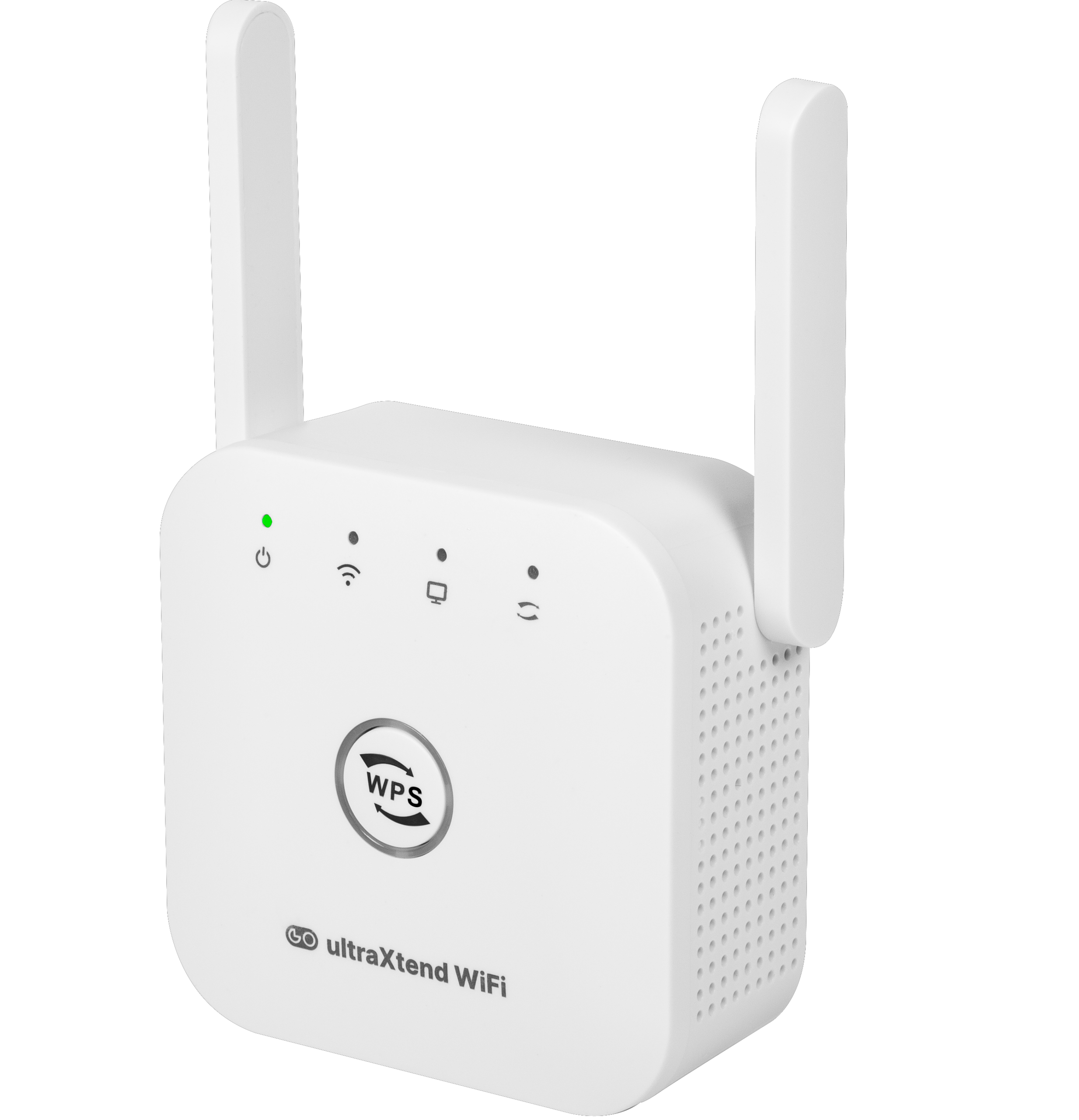
The supplied image shows a white wireless networking device with two external antennas and front-facing indicator lights. Because the branding shown in the image reads differently from NetBoost, buyers should verify that the pictured unit is the same model being offered for sale.
4. Status Indicator Lights
Some repeaters include indicator lights that help users identify power status, wireless connectivity, or signal strength. These indicators can make it easier to determine whether the device is operating and whether its location needs adjustment.
The meaning of each indicator depends on the particular model, so the manufacturer’s instruction manual should be consulted.
5. Compatibility With Existing Networks
Compatibility is an important consideration when buying a repeater. Most conventional repeaters are intended to work with compatible wireless routers, but supported standards, frequency bands, security protocols, and configuration methods can differ.
Before purchasing NetBoost WiFi Repeater, confirm that it supports your current router and the network configuration used in your home.
Potential Benefits of NetBoost WiFi Repeater
A WiFi repeater may offer several practical advantages when selected and installed correctly.
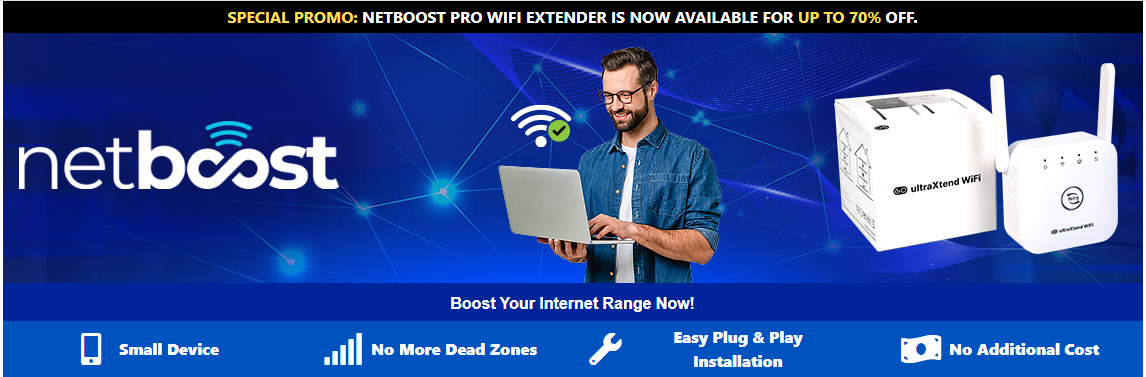
Better coverage in weak-signal areas: Extending a usable wireless signal may help users access their network in rooms that previously had unreliable reception.
Convenient installation: Many consumer repeaters are designed for straightforward setup, although the exact process depends on the model.
Support for multiple connected devices: A compatible repeater may allow supported devices to connect from a greater distance from the primary router. The total capacity depends on the hardware and network conditions.
Reduced connectivity frustration: Improved signal availability in a previously weak area may make browsing, messaging, and ordinary online activities more convenient.
Potential alternative to replacing a router: If the router works properly but coverage is limited, a repeater may be worth considering before investing in a completely new networking system.
These are potential benefits of WiFi repeaters generally, not independently confirmed results specific to NetBoost.
How to Set Up NetBoost WiFi Repeater
The installation process for most repeaters follows a few common steps. Always follow the instructions supplied with the exact model.
Step 1: Check the Package
Inspect the product, included accessories, documentation, and model number. Confirm that the device matches the item advertised by the seller.
Step 2: Select a Suitable Location
Place the repeater somewhere between the router and the area where coverage is poor. Ideally, the device should still receive a reasonably strong signal from the main router.
Placing it inside the dead zone may prevent it from receiving enough signal to retransmit effectively.
Step 3: Connect the Device to Power
Plug the repeater into a suitable electrical outlet and wait for it to start. Check the indicator lights and consult the manual to understand their meaning.
Step 4: Configure the Wireless Connection
Depending on the model, configuration may use a WPS button, a web-based setup page, or a dedicated application. Follow the manufacturer’s instructions to connect the repeater to your existing wireless network.
Use the correct network password and choose appropriate security settings.
Step 5: Test the Connection
Connect a smartphone or laptop in the previously weak area. Test ordinary browsing, video playback, and other activities relevant to your needs.
If performance remains poor, try moving the repeater closer to the router while keeping it between the router and the target area.
Possible Limitations to Consider
Although repeaters can improve coverage, they are not a universal solution to every internet problem.
One limitation is speed. Some repeaters use the same wireless connection to receive and retransmit data, which can reduce available throughput. Actual performance depends on the device design and network configuration.
Another consideration is interference. Neighboring wireless networks, walls, appliances, and other obstacles can affect results.
A repeater also cannot fix every issue caused by an unreliable internet service provider, an overloaded router, or a faulty modem. If the internet connection is already slow near the router, extending the signal may not resolve the underlying problem.
For larger properties or demanding network requirements, a mesh WiFi system or a wired access point may be a better choice.
Is NetBoost WiFi Repeater Easy to Use?
Ease of use depends on the actual product and the quality of its setup instructions. Consumers who prefer simple networking equipment should look for clear installation guidance, straightforward configuration options, and accessible customer support.
Before ordering, check whether the product requires an application, whether its configuration interface is available in a language you understand, and whether technical assistance is provided if setup fails.
It is also worth checking whether the device supports modern security protocols and receives any necessary firmware updates.
NetBoost WiFi Repeater Price and Availability
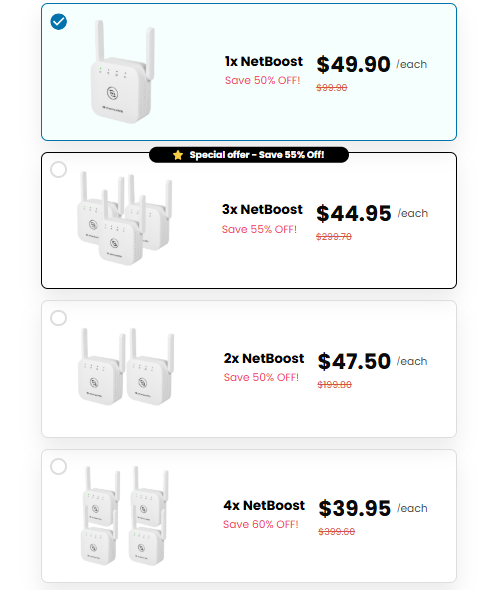
The price of NetBoost WiFi Repeater may vary depending on the seller, promotional offers, shipping charges, and package options. A reliable current price cannot be established from the supplied image alone.
Before making a purchase, compare the final checkout price with established networking products that offer similar specifications. Review the warranty, return policy, shipping conditions, and seller reputation.
Be cautious of advertisements promising exceptionally large coverage areas or dramatic speed improvements without providing measurable test results. Independent reviews and clearly documented technical specifications are more useful than unsupported marketing claims.
Who Should Consider NetBoost WiFi Repeater?
A wireless repeater may be suitable for people who have a functioning router but experience limited coverage in a particular room or section of their home.It may also be worth considering for small offices or apartments where extending an existing wireless network is more practical than installing additional networking equipment.
However, people who require consistently high speeds for professional video production, competitive gaming, large file transfers, or numerous simultaneous high-bandwidth connections should examine the technical specifications carefully. A wired access point or mesh system may deliver more suitable results. The best choice depends on property size, router performance, internet speed, building materials, and the number of connected devices.
Final Verdict: Is NetBoost WiFi Repeater Worth It?
NetBoost WiFi Repeater may be worth investigating if your main concern is weak WiFi coverage in specific areas of your home or workplace. A properly selected and positioned repeater can help extend an existing wireless network and make everyday internet access more convenient.
However, a purchasing decision should not rely solely on product photographs or broad advertising promises. The exact model, manufacturer details, supported wireless standards, security features, coverage claims, warranty, and return policy should all be verified.