

Driving on busy roads can be unpredictable, whether you are commuting to work, travelling with family, or taking a long road trip. Unexpected accidents, traffic disputes, and other incidents can happen within seconds. Having a reliable dash camera can help drivers record important moments on the road and maintain useful video evidence when needed. The RoadVision Dash Cam is presented as a compact driving camera designed to capture road activity while offering practical features for everyday motorists.
With its modern design, wide-angle lens, built-in LCD display, and intelligent sensor technology, RoadVision Dash Cam aims to make in-car recording convenient. Its advertised features focus on capturing a broad view of the road, improving visibility in different lighting conditions, and providing a straightforward recording experience.
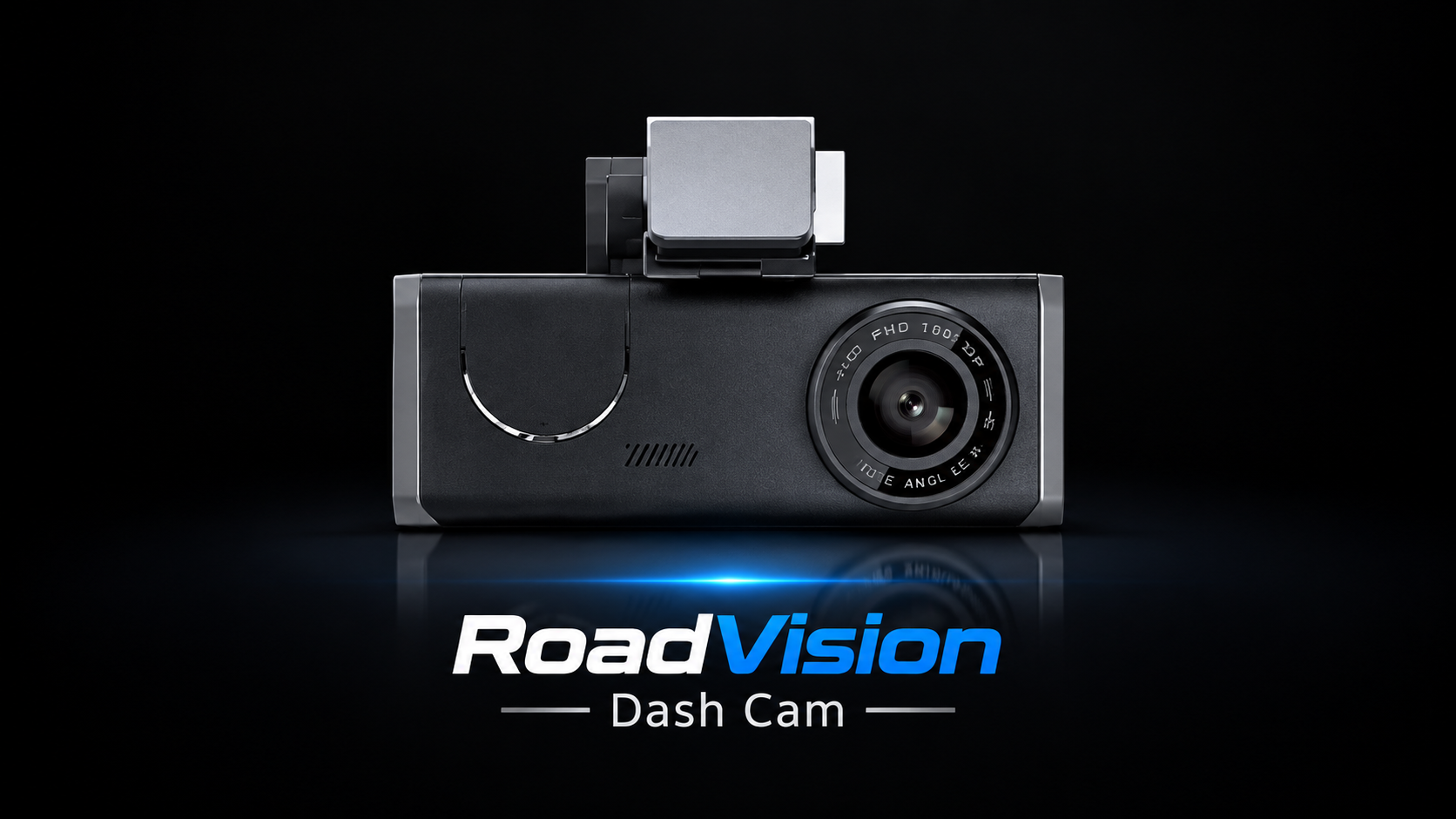
What Is RoadVision Dash Cam?
RoadVision Dash Cam is a vehicle-mounted camera intended to record driving activity. Dash cameras are commonly used to document journeys, capture unexpected incidents, and provide a visual record of events that occur while a vehicle is moving.
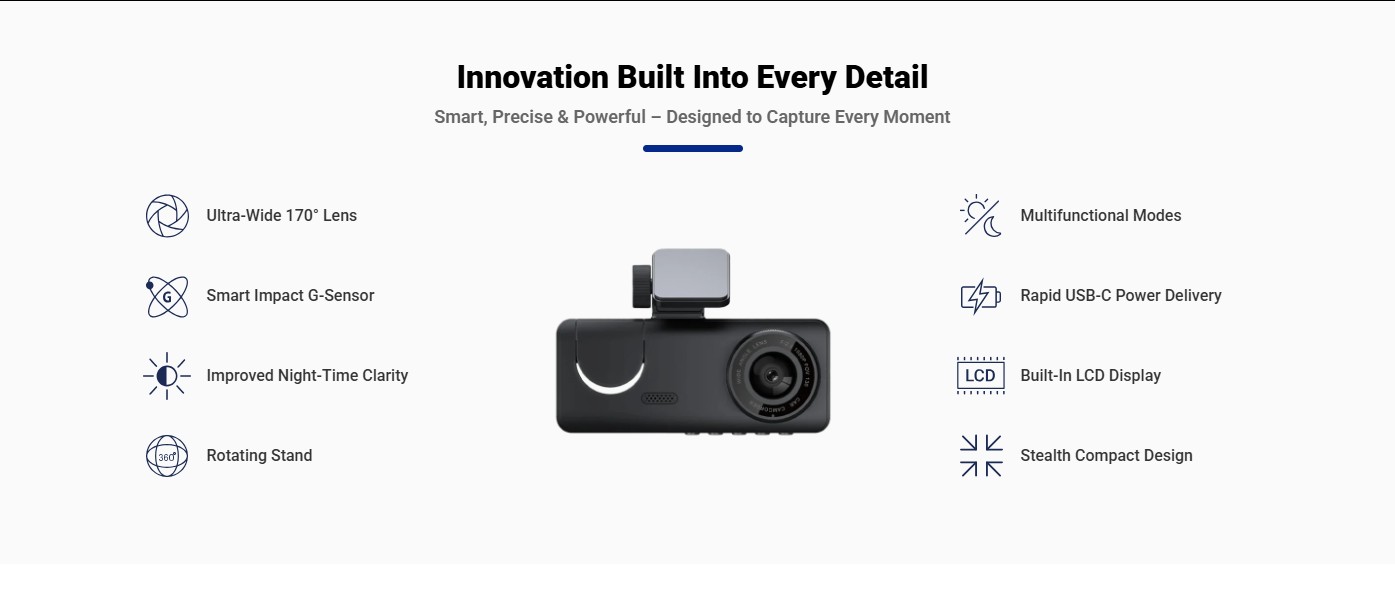
The product image highlights a compact black camera with a front-facing lens, an LCD display, and a rotating mounting arrangement. The advertised specifications include an ultra-wide 170-degree lens, a smart impact G-sensor, improved night-time clarity, multifunctional recording modes, USB-C power delivery, and a built-in LCD screen.
These features are intended to support convenient operation without making the device unnecessarily bulky. However, actual recording quality, storage capacity, and compatibility should be verified through the manufacturer’s specifications before buying.
Key Features of RoadVision Dash Cam
1. Ultra-Wide 170-Degree Lens
One of the main advertised features is the 170-degree ultra-wide lens. A wide viewing angle can capture more of the road in front of a vehicle than a narrow-angle camera, depending on the mounting position and lens characteristics.
This broader perspective may help record neighbouring lanes, intersections, and roadside activity. It can be particularly useful when driving through busy urban streets or navigating unfamiliar routes.
A wide-angle lens can also introduce some image distortion near the edges. Buyers should therefore look for sample footage to determine how clearly the camera captures vehicles, road signs, and other important details.
2. Smart Impact G-Sensor
The advertised G-sensor is designed to detect sudden movements, such as those associated with abrupt braking or an impact. In compatible dash cameras, this type of sensor can trigger an event-recording function or protect selected footage from being overwritten.
This can be valuable when a driver needs to preserve a recording after an unexpected incident. Instead of searching through hours of video, the user may be able to locate a protected event file more easily.
The exact sensitivity settings and file-locking behaviour should be confirmed before purchase. A G-sensor is a recording aid, not a substitute for safe driving or a guarantee that every incident will be recorded correctly.
3. Improved Night-Time Clarity
Night-time driving presents challenges because street lighting, glare, reflections, and low visibility can affect video quality. RoadVision Dash Cam advertises improved night-time clarity to support recording in darker conditions.
Clear footage after sunset may help document road conditions, traffic movements, and unexpected events. However, low-light performance depends on several factors, including the camera sensor, lens aperture, exposure processing, and available light.
The phrase improved night-time clarity does not establish a specific level of performance. Prospective buyers should check genuine day-and-night sample recordings and confirm whether important details remain readable in poorly lit environments.
4. Rotating Stand for Flexible Positioning
The product image identifies a rotating stand as another feature. An adjustable mounting arrangement can help users position the camera for a suitable view through the windscreen.
Correct positioning is important because a camera aimed too high may record mostly the sky, while one aimed too low may miss relevant traffic activity. An adjustable stand can make it easier to find an appropriate angle.
Before installation, ensure that the camera does not obstruct the driver’s view, interfere with airbags, or create distracting reflections. The mounting system should also hold the device securely on uneven roads.

5. Multifunctional Recording Modes
RoadVision Dash Cam advertises multifunctional modes intended to provide flexibility for different recording situations. Depending on the actual supported functions, dash cameras may offer continuous recording, loop recording, or event recording.
Continuous recording can document a journey, while loop recording allows compatible devices to reuse storage space by replacing older footage. Event recording may help preserve selected clips following a detected impact.
Not every dash camera includes every mode, so buyers should verify the precise functions available on this model. Parking surveillance, audio recording, and other specialised options should not be assumed unless they are explicitly listed in the official specifications.
6. Rapid USB-C Power Delivery
USB-C connectivity is highlighted as part of the advertised design. A USB-C connection can make powering a compatible device more convenient and may simplify cable management.
However, the presence of a USB-C port does not automatically establish fast charging, a particular charging wattage, or compatibility with every vehicle adapter. Buyers should confirm the required power input and whether a suitable cable or adapter is included.
For regular use, a reliable power connection is essential to prevent unexpected recording interruptions during a journey.
7. Built-In LCD Display
The built-in LCD display can provide a direct way to view the camera’s interface and, if supported, review recordings or adjust settings.
A screen may be useful during initial installation because it can help drivers check the camera’s orientation. It can also make menu navigation more straightforward than operating a device with limited physical controls.
Drivers should configure the camera while parked rather than attempting to adjust settings while moving. The screen’s size, resolution, and available controls are additional specifications worth checking before purchase.
8. Compact and Discreet Design
The RoadVision Dash Cam shown in the product image has a compact black body. A discreet design can be helpful for drivers who prefer to avoid large devices covering a substantial portion of the windscreen.
A smaller camera may also be easier to position neatly and integrate with existing vehicle accessories. Cable routing remains important, however, because loose wires can distract the driver or interfere with vehicle controls.
The final installation should be secure, tidy, and compliant with applicable road safety rules.
Potential Benefits of RoadVision Dash Cam
A dash camera can provide several practical advantages when used correctly. RoadVision Dash Cam’s advertised features may appeal to drivers who want a simple way to document their journeys.
A visual record of driving: Recorded footage can help drivers review what happened during an incident and may support discussions with insurers or other parties.
Greater awareness of road events: Reviewing recordings can help users understand traffic situations that were difficult to observe in real time.
Convenience for everyday travel: A compact camera can be suitable for routine commuting, family journeys, and longer trips.
Flexible positioning: An adjustable stand may help users obtain a useful recording angle without complicated installation.
Accessible operation: A built-in LCD screen can simplify setup and allow access to supported camera functions.
These benefits depend on reliable operation, correct installation, adequate storage, and the quality of the recorded footage. A dash camera cannot prevent every accident or guarantee a particular insurance outcome.
Installation and Everyday Use
Installing a dash camera usually involves selecting a suitable position on the windscreen, securing the mounting bracket, and connecting the device to an appropriate power source.
Before using RoadVision Dash Cam, read the supplied instructions carefully. Check that the camera is firmly mounted and that its lens has a clear view of the road. Route the cable away from the steering wheel, pedals, airbags, and other moving or safety-critical components.
If the camera requires a memory card, confirm the supported card type and maximum capacity. Format the card according to the manufacturer’s instructions and make a short test recording before relying on the device during an important journey.
It is also sensible to review the camera periodically. Check that the lens is clean, the mounting position has not shifted, and the device is recording as expected. Important footage should be backed up promptly because storage systems can fail or overwrite files.
RoadVision Dash Cam: Important Buying Considerations
Before purchasing, prospective buyers should examine several details beyond the headline features.
First, confirm the actual video resolution and frame rate. A wide-angle lens alone does not guarantee that number plates or distant road signs will be clearly readable.
Second, check whether a memory card is included and understand the device’s storage requirements. Third, verify whether parking-mode recording is supported and whether it requires additional wiring or accessories.
Warranty coverage, return conditions, customer support, and the seller’s reputation are also important. Buyers should review the total cost, including any separately purchased memory card, power adapter, or installation accessories.
Finally, check the manufacturer’s privacy guidance and applicable local rules concerning video and audio recording. Requirements may differ depending on where the vehicle is used.
Who May Consider RoadVision Dash Cam?
RoadVision Dash Cam may be worth considering for commuters, regular motorists, family drivers, and people who frequently travel on unfamiliar roads. Its advertised wide-angle lens, G-sensor, LCD display, and compact design may appeal to users looking for a practical recording device.
Drivers who require professional-grade evidence, exceptionally clear number-plate capture, or advanced parking surveillance should compare detailed specifications and sample footage before making a decision.
The most suitable dash camera is one that meets the user’s recording needs, operates reliably, and fits the vehicle without creating visibility or safety problems.
Final Verdict
RoadVision Dash Cam is presented as a compact vehicle camera featuring an ultra-wide 170-degree lens, a smart impact G-sensor, improved night-time clarity, a rotating stand, multifunctional modes, USB-C connectivity, and a built-in LCD display.
These advertised features suggest a design focused on convenient everyday recording. A wide viewing angle may help capture more of the surrounding road, while impact detection and a display can make reviewing and managing footage more convenient when the corresponding functions are supported.